
Trenchless sewer repair fixes or replaces a sewer line through one or two small access holes instead of a trench along the whole pipe. The two main methods are pipe lining, which cures a new pipe inside the old one, and pipe bursting, which pulls a new pipe through while breaking the old one apart. It saves lawns, driveways and landscaping, but only works when the camera shows the pipe is a good candidate.
Trenchless is a big word in sewer ads, and it is often oversold. It still needs digging, just much less of it. It also is not the right fix for every pipe. What it does well is save you from tearing up a driveway, a mature garden or a long front lawn when the whole line needs work. Here is how to tell whether your line qualifies.
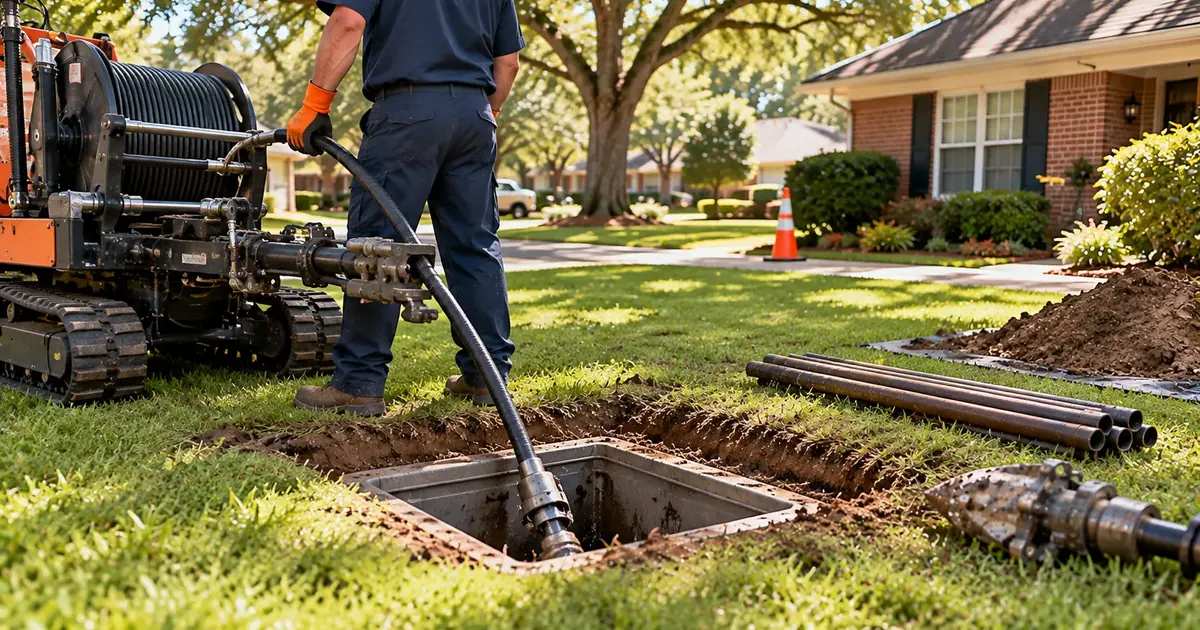
The Two Trenchless Methods
| Pipe lining (CIPP) | Pipe bursting | |
|---|---|---|
| How it works | A resin-soaked liner is pulled or inverted into the old pipe and cured hard, forming a new pipe inside | A bursting head pulls a new HDPE pipe through the old line, breaking the old pipe outward |
| Access needed | Often a cleanout plus one small pit | A pit at each end of the run |
| Pipe size after | Slightly smaller inside | Same size or larger |
| Good for | Cracks, root-filled joints, pinholes in pipe that is still round | Pipe that is badly cracked, undersized or too damaged to line |
When Trenchless Works
- The line has cracks or leaking joints along much of its length.
- Roots get into many joints and keep coming back.
- The pipe runs under a driveway, patio, big tree or finished landscaping.
- The pipe is still round enough for a liner or bursting head to pass.
When Trenchless Does Not Work
We will tell you honestly when the camera rules it out:
- Bellies. A liner follows the sag and bursting cannot reliably lift a sunken pipe, so the low spot remains. Re-grading by digging is the fix.
- Fully collapsed sections. If the pipe has caved in, the collapsed spot has to be dug out first.
- Severely flattened Orangeburg. Badly deformed fiber pipe may not accept a liner, though bursting or replacement can work. See Orangeburg pipe replacement.
- Large offsets. A big step between sections can stop a liner from passing or leave a ridge.
- One small break. A single bad spot is usually cheaper to fix with a spot repair.
How a Trenchless Job Goes
Camera and measure
A camera inspection confirms the pipe qualifies and measures its length and diameter.
Clean the pipe
Hydro jetting removes roots, grease and scale so the liner bonds or the bursting head passes cleanly.
Install
The liner is cured in place, or the new pipe is pulled through, from the access points.
Reconnect and verify
Connections are finished and a final camera run shows the new pipe before the pits are backfilled.
Saving Driveways and Old Trees
This is where trenchless earns its keep in Pine Bluff. Many older homes have a sewer line that runs under a concrete driveway or right past a large oak that has shaded the yard for decades. Trenching under the driveway means breaking and re-pouring concrete, and trenching through a big root zone can damage or kill the tree. A liner or burst pipe goes through the old line underground, so the driveway stays in one piece and the tree’s main roots are left alone.
Questions to Ask Any Trenchless Contractor
- Can I see the camera footage that shows my pipe qualifies?
- Will the line be cleaned before lining, and how?
- How will you reopen or reconnect any branch lines?
- Will I see a camera run of the finished pipe?
- What happens if the liner or new pipe cannot pass a section?
We answer all five before you agree to anything.
Is Trenchless Cheaper?
Sometimes. The trenchless work itself often costs more per foot than laying new pipe in a trench, but you skip the cost of replacing driveways, sidewalks, landscaping and sod. For a short line under open lawn, a traditional dig can be the better deal. Read trenchless vs. dig-up sewer repair: which costs less for how to compare.
Every trenchless quote comes after the camera, like all sewer line repair in Pine Bluff we do, so you know the pipe really qualifies.
Call and my crew will camera the line and tell you honestly if trenchless will work, with prices for both options.
Trenchless Sewer Repair FAQ
How long does trenchless repair last?
Cured-in-place liners and HDPE pipe are both designed for decades of service when installed in a properly prepared line.
How long does the job take?
Many residential trenchless jobs are finished in one to two days, including cleaning and curing time.
Does trenchless really work?
Yes, on the right pipe. Read does trenchless sewer repair really work for the full answer.