
Hydro jetting cleans a sewer line with a high-pressure stream of water, usually 1,500 to 4,000 PSI for a home line, that scrubs roots, grease and sludge off the full inside wall of the pipe. In Pine Bluff we always run a camera first, because jetting is the right call for a sound pipe and the wrong one for a crushed or rotted line.
Your main line backs up, a plumber snakes it, and three months later the tub is gurgling again. Sound familiar? That repeat clog is the most common reason Pine Bluff homeowners call us about hydro jetting. A snake pokes a hole through the blockage. Jetting washes the whole pipe clean, so the clog has nothing left to grab onto.
When Hydro Jetting Makes Sense in Pine Bluff
Most homes here were built between the 1940s and the 1990s, and plenty around the Fifth Avenue Historic District are older than that. Those houses sit on clay and cast iron sewer lines, and the big oaks that shade our neighborhoods send roots straight into the joints. Jetting is a strong fit when:
- The same drain or the main line clogs again weeks after being snaked.
- The camera shows roots, grease or scale coating the pipe wall, but the pipe itself is still round and in one piece.
- You run a restaurant or commercial kitchen and grease keeps building up in the line.
- You want the line fully clean before a sewer pipe lining job, since a liner needs a clean surface to bond to.
- You are selling a house and want the line cleaned and recorded before the buyer’s inspection.
How We Jet a Sewer Line
Camera inspection
We run a sewer camera through the cleanout and show you the footage. You see the roots, the grease and the condition of the pipe with your own eyes.
Price before we start
You get the price and our honest opinion. If the pipe is too damaged to jet, we tell you and explain the options.
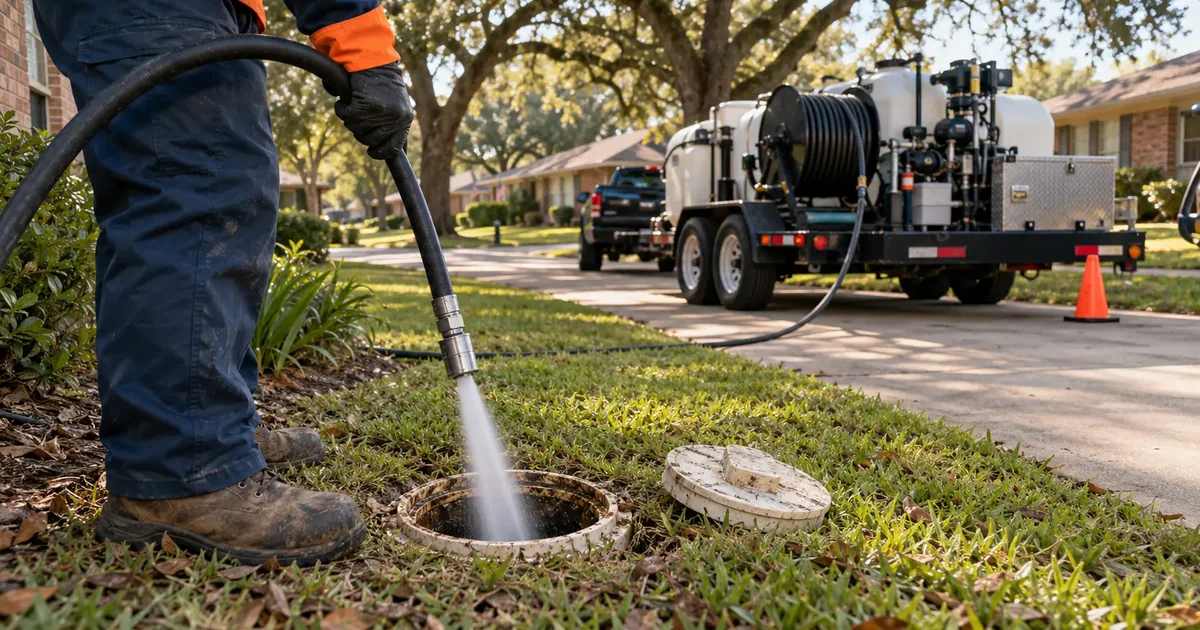
Jet from the cleanout
The nozzle pulls itself down the line with rear-facing jets that scrub the wall and flush the debris toward the city main.
Camera again
We run the camera one more time so you can see the clean pipe. You keep the before and after footage.
Hydro Jetting vs. Snaking
Both have a place. A snake (also called rodding or augering) is quick and cheap for a simple clog. Jetting costs more but lasts longer when roots or grease are the real problem.
| Snaking | Hydro jetting | |
|---|---|---|
| What it does | Punches a path through the clog | Cleans the full inside wall of the pipe |
| Roots | Cuts a channel, roots grow back fast | Cuts and flushes the root mass |
| Grease and sludge | Mostly left on the pipe wall | Scoured off and flushed out |
| Best for | One-off clogs, very fragile pipe | Repeat clogs, roots, grease, pre-lining prep |
For the full comparison, read our guide on hydro jetting vs. snaking a sewer line. If the snake is the better tool for your line, we use it. That work falls under our main sewer line clog clearing service.
Is Hydro Jetting Safe for Old Pipes?
It depends on the pipe, which is exactly why the camera goes first. Clay and cast iron in decent shape handle jetting well at the right pressure. We do not jet a line that the camera shows is crushed, badly offset, or made of Orangeburg pipe that has started to flatten, because the water can push through a weak spot. In those cases the fix is a spot repair or Orangeburg pipe replacement, not cleaning. Our guide Is Hydro Jetting Safe for Old Pipes? goes into the details.
Roots, Grease and Why the Clog Keeps Coming Back
Tree roots find the tiny gaps at the joints of clay pipe and grow into a net inside the line. Toilet paper and grease catch in that net and the line slows, then stops. A snake tears a hole through the middle and the roots are back within a season. Jetting clears the pipe edge to edge, and the camera shows how many entry points there are. If roots keep returning at the same joint, a tree root removal plan or a sealed repair at that joint stops the cycle for good.
Grease is the other big one, especially for kitchens near downtown Pine Bluff. Fat cools and hardens on the pipe wall until the opening is the size of a finger. Jetting melts and scrapes it out. For restaurants, pair it with our grease buildup removal and a regular cleaning schedule.
What Hydro Jetting Costs
The price depends on how long your line is, how easy the cleanout is to reach, and what the camera finds. A line with no outdoor cleanout may need one installed first. You get the exact number after the camera inspection and before we start, with no surprise charges. Financing is available for bigger jobs.
Call and my crew will camera the line, show you the footage and give you the jetting price before we start. Licensed and insured, 24/7.
Hydro Jetting FAQ
How long does hydro jetting take?
Most home sewer lines take one to three hours, including the camera inspection before and after. Heavy root masses or very long lines take longer.
Does hydro jetting remove tree roots?
Yes. A root-cutting nozzle cuts the roots and the water flushes them out. Roots can grow back through a cracked joint, so we show you where they entered and what it takes to seal it.
How often should a sewer line be jetted?
Many homes never need it again once the cause is fixed. Lines with heavy root problems or commercial grease often need jetting every 12 to 24 months. Our maintenance plans set a schedule that fits your line.
Can you jet a line without a cleanout?
Sometimes we can go through a roof vent or pull a toilet, but an outdoor cleanout is safer and cleaner. If your home does not have one, we can add a sewer cleanout so future cleaning is quick.
Will hydro jetting make a mess in my house?
No. We work from the outdoor cleanout and the water flows down the line to the city sewer, not back into your home.