
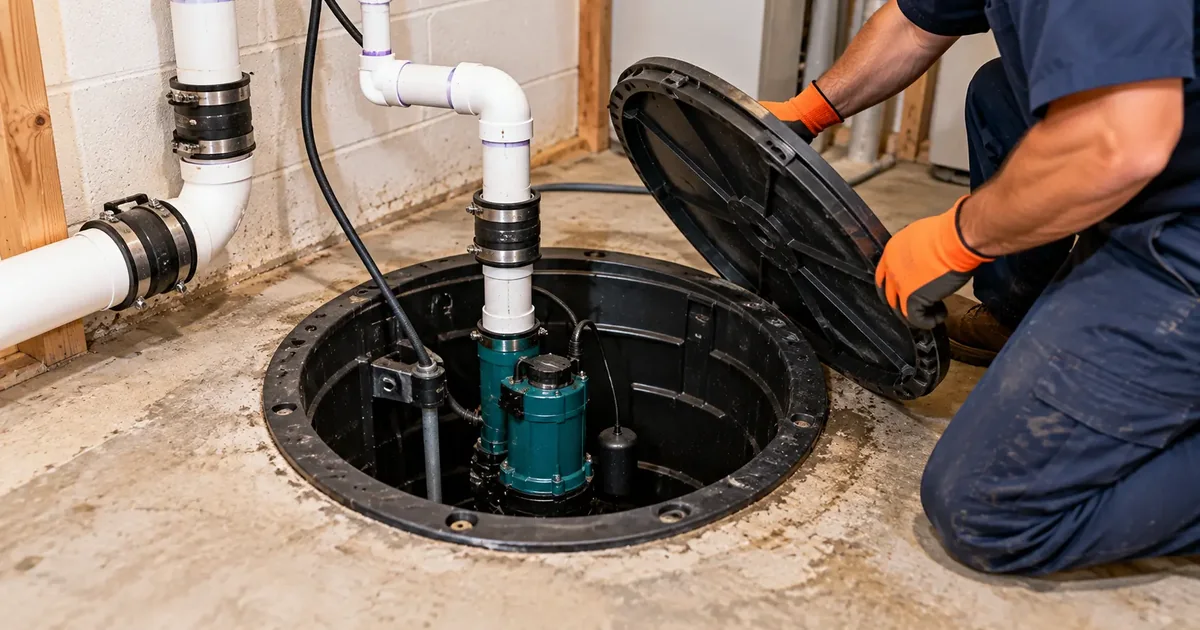
A sewage ejector pump sits in a sealed basin below fixtures that are lower than the main sewer line, such as a basement bathroom, a laundry in a low room or a building downhill from the sewer. When waste fills the basin to a set level, a float switches the pump on and it pushes the sewage up through a discharge pipe and check valve into the gravity sewer line.
Gravity does most of the work in a sewer system. Waste flows downhill from your drains to the city main. But when a toilet, shower or washer sits lower than the sewer line leaving the house, gravity cannot help. An ejector pump lifts that waste up to where it can drain away. When the pump fails, the basin fills and sewage has nowhere to go but back out of the lowest drain.
Signs Your Ejector Pump Is in Trouble
- The high-water alarm is sounding.
- The pump runs constantly, or hums without pumping.
- The pump cycles on and off very frequently.
- Sewage smell near the basin or the low bathroom.
- Toilets or drains near the basin are slow or backing up.
- Loud grinding, rattling or clunking when it runs.
Common Causes of Ejector Pump Failure
- Stuck float switch caught on debris or the basin wall, so the pump never turns on or never turns off.
- Clogged impeller from wipes, paper towels or feminine products.
- Failed check valve letting pumped waste flow back into the basin, so the pump runs over and over.
- Burned-out motor at the end of its life or from running dry.
- Tripped breaker or power problem, which is worth checking first.
- Blocked discharge pipe or main line, so the pump runs but the waste cannot leave. A main line clog can look like a pump failure.
Repair or Replace?
A stuck float, a clogged impeller or a bad check valve can often be fixed on the spot. A motor that has burned out, a pump that is many years old, or a basin that is cracked or undersized usually calls for replacement. We will show you what failed and give you both options with prices before we start.
How We Service an Ejector Pump
Make it safe
We cut power to the pump and stop water use to the basin.
Open and diagnose
The basin is opened and pumped down so we can check the float, pump, check valve and discharge line.
Repair or replace
We clear or replace the failed part, or install a new pump sized for your fixtures.
Test the cycle
We fill the basin, watch the pump start and stop correctly, confirm the check valve holds and reseal the lid.
New Ejector Pump Installations
Planning a new bathroom, laundry or wet bar below the level of your sewer line, or plumbing a shop or guest house downhill from the main line? We install sealed basins, ejector or grinder pumps, check valves, vents and alarms, and tie the discharge into the gravity sewer. In most Pine Bluff homes, which are slab or crawlspace construction, this comes up most often with additions and outbuildings rather than basements.
Ejector Pumps in Rentals and Shared Buildings
In rental homes and small commercial buildings, ejector pumps fail more often, usually because tenants or customers do not know what cannot go down the drain. Wipes and paper towels are the top cause of clogged impellers we see. Landlords can cut down on calls by posting a short note in the bathroom, adding an alarm the tenant can hear, and scheduling an annual basin cleaning. Our sewer repair for landlords and commercial sewer services pages cover how we handle access and billing for owners and managers.
Keeping the Pump Healthy
- Only toilet paper goes down toilets that drain to the basin. No wipes of any kind.
- Do not pour grease down sinks that drain to the pump.
- Test the alarm now and then by lifting the float with the power on.
- Have the basin cleaned and inspected every year or two.
If the pump is fine but the line it feeds is not, we handle that too, as part of our sewer line repair in Pine Bluff. See also 24/7 emergency sewer repair.
Stop using the low drains and call. My crew will diagnose it and give you repair and replacement prices before we start. 24/7.
Sewage Ejector Pump FAQ
How long do ejector pumps last?
Life span depends on use and what goes down the drains. Many last several years or more with proper care; clogs and running dry shorten it.
Is an ejector pump the same as a sump pump?
No. A sump pump moves groundwater. An ejector pump handles sewage and solids in a sealed, vented basin.
What is a grinder pump?
A grinder pump chops solids into a slurry before pumping, which lets it push waste through a smaller pipe over longer distances or greater height.