
Most sewer cleanouts are a capped pipe, 3 to 4 inches wide, sticking up a few inches from the ground within a few feet of the house, usually on the side closest to the street or near a bathroom. Some are near the property line. Indoors, look in a crawlspace, garage, utility room or behind an access panel. If you cannot find one, it may be buried or your home may not have one.
Knowing where your cleanout is saves time and money when the line backs up, because a crew can clear it from outside instead of pulling a toilet. It is worth finding before you need it.
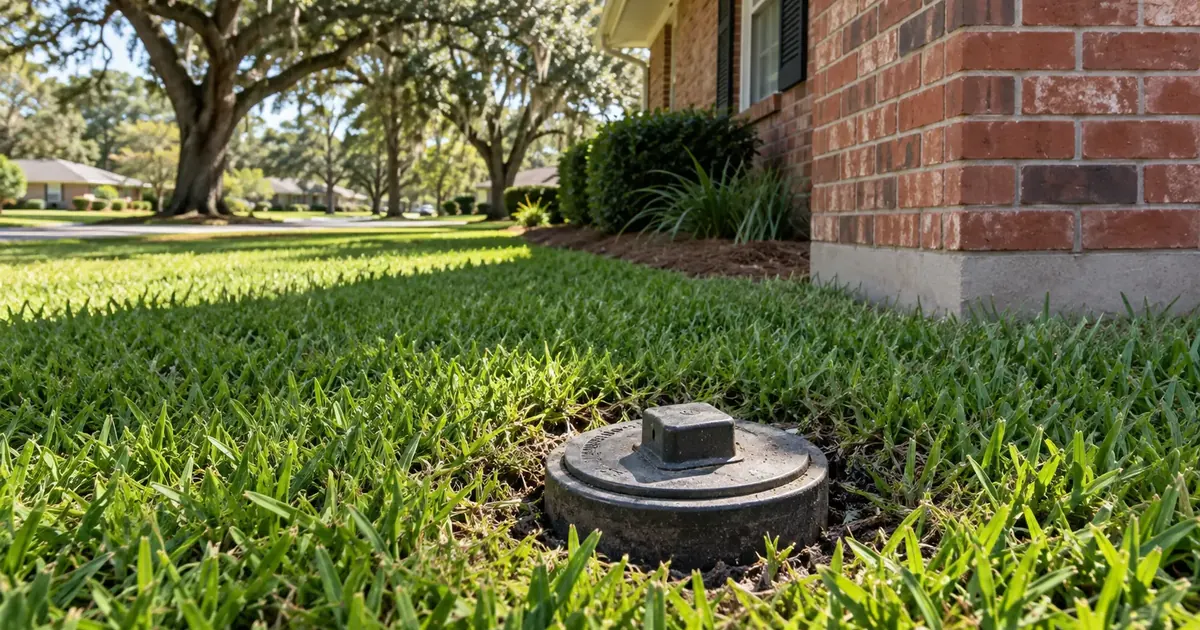
What Does a Cleanout Look Like?
- A round pipe, usually white PVC or black ABS, sometimes cast iron in older homes.
- A threaded cap on top, often with a square nub or slot for a wrench.
- Sticking up a few inches above the ground, or flush with it.
- Sometimes inside a small round or square access box.
Where Should You Look Outside?
Near the foundation
Walk the side of the house facing the street, within 3 to 5 feet of the wall.
By the bathrooms
Outside the wall closest to the main bathroom or kitchen.
Along the sewer path
Between the house and the street, sometimes near the driveway.
At the property line
Some homes have a second cleanout near the street.
Where Should You Look Inside?
- In the crawlspace, near where the main drain exits the house.
- In a garage, utility room or laundry room, often low on a wall.
- Behind a small access panel near a bathroom.
How Do You Find a Buried Cleanout?
Over the years, mulch, soil, grass and landscaping can cover a cleanout. Probe gently with a thin rod in the likely spots, look for a slight dip or a patch where grass grows differently, and check old home inspection reports or plans. A professional can also run a camera with a transmitter from inside and use a locator to find exactly where the line and cleanout sit.
Should You Open It?
If sewage is backing up, opening the cleanout can relieve pressure and stop water rising in the house, but it can also spill sewage in the yard. Open it slowly, with gloves, and stand to the side. If standing water sits in the cleanout, the blockage is between it and the street. Never open it if you are unsure; call instead.
What If Your Home Has No Cleanout?
Many older Pine Bluff homes were built without an outdoor cleanout. Clearing a clog then means pulling a toilet or going through a roof vent, which takes longer and costs more. Adding one is usually a small job that pays for itself over time. See sewer cleanout installation.
Keep It Findable
Once you find it, mark it. Keep mulch, pavers and plants off the cap, and let everyone in the household know where it is. In an emergency at night, being able to point a crew straight to it saves real time.
Read why a main sewer line keeps backing up, or see how we approach sewer line repair in Pine Bluff.
Call and my crew will locate it, or add one so future clogs are faster and cheaper to clear. 24/7.
FAQ
How many cleanouts does a house have?
Often one main outdoor cleanout, sometimes a second near the street, plus smaller ones on interior drains.
Should the cleanout have water in it?
No. Standing water usually means a blockage downstream toward the street.
Who owns the cleanout?
A cleanout on your property is generally part of your private sewer line.