
A sewer backup happens when the main sewer line is blocked and waste water has nowhere to go but up through the lowest drains in the house, usually a shower, tub or floor drain. The first job is to stop more water going down the drains and clear the blockage. Then the line gets a camera inspection to find the cause, and contaminated areas need to be cleaned and disinfected.
Few things are worse than watching dirty water rise in the tub. It smells, it spreads, and every minute it sits it soaks further into floors and walls. Here is exactly what to do in the first hour, and how my crew handles the rest.
Your First Hour After a Sewer Backup
Stop the water
Do not flush, shower, run the dishwasher or washing machine. Every gallon you send down comes back up.
Stay safe
Keep kids and pets away from the water. Turn off power to any area where water is near outlets or cords, if you can do it without standing in water.
Document it
Take photos and video of the water, the damage and any belongings affected. Your insurance company will want them.
Make the calls
Call Pine Bluff Wastewater Utility (870-535-6603) for a free check of the city side, and call us at (870) 384-3279 to clear your line.
Read our full guide on what to do after a sewer backup.
How We Handle a Backup
- Clear the line. We open the cleanout and clear the blockage with rodding or hydro jetting so the house can drain again. Details on our main sewer line clog page.
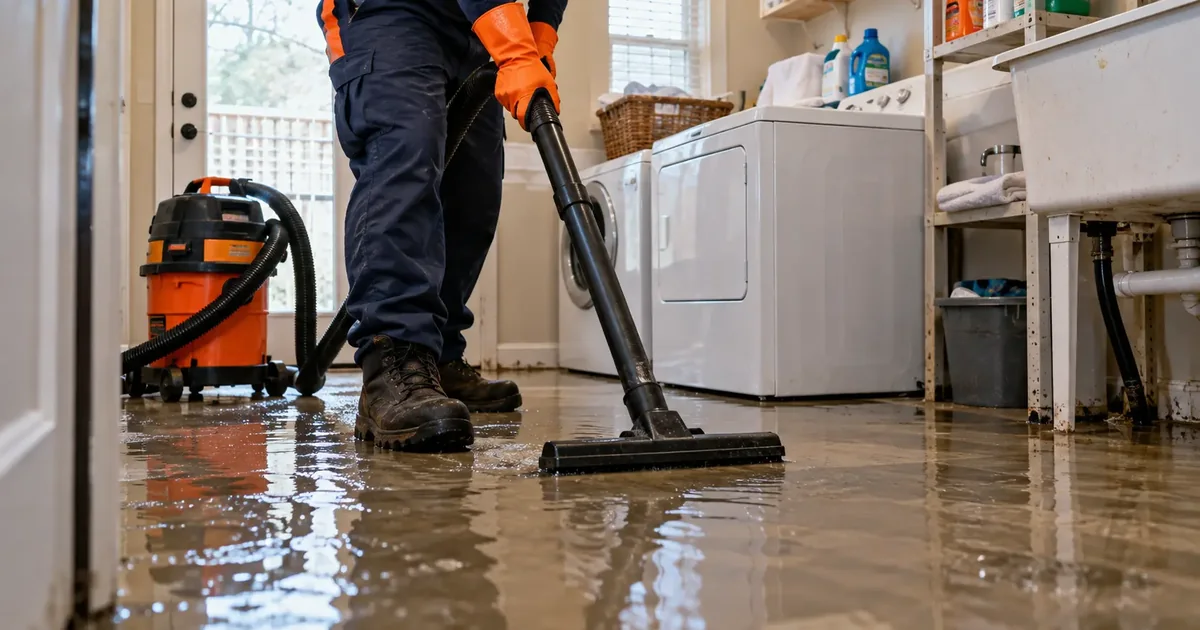
- Remove standing water. We pump or vacuum out the water that came up through the drains in the affected area.
- Find the cause. A camera inspection shows whether it was roots, grease, a belly, a collapse or a problem in the city main.
- Fix it so it does not happen again. You get a price for the repair the footage supports, before any work starts.
- Paperwork for your claim. Photos, footage and a written report of the cause through our insurance claim help.
What About Water Damage Restoration?
We handle the sewer side: stopping the backup, clearing the line, removing standing water from the affected area and fixing the pipe. When sewage has soaked into carpet, drywall or subfloors across a large area, a water damage restoration company should dry out and sanitize the house. We are happy to coordinate with them, and our footage helps them and your insurer understand what happened.
What Usually Causes Backups in Pine Bluff
- Roots in old clay sewer lines, very common under mature trees.
- Grease from years of kitchen use coating the pipe.
- Wipes, paper towels and other items that do not break down.
- A collapsed or bellied section of old pipe.
- Heavy rain overwhelming the city system, which can push water back into low homes. A backwater valve protects against that.
Backups After Heavy Rain
If your drains back up during or right after a big storm, and they work fine the rest of the year, the cause may not be your pipe at all. Rainwater getting into the sewer system can overload city lines, and homes with low-set drains feel it first. The camera will show whether your line is clear. If it is, a backwater valve and a call to the utility are the right next steps. Read can heavy rain cause a sewer backup for more.
Preventing the Next One
Once the cause is known, the fix is usually one of three things: repair the damaged section, keep the line clean on a maintenance schedule, or add a backwater valve if the city side backed up into your home. Our guide on how to prevent a sewer backup covers the everyday habits that help too.
Emergency backups are where our camera-first approach to sewer line repair in Pine Bluff matters most. You get the house draining first, then the facts, then a price.
Stop using water and call. My crew is on call 24/7 to clear the line and find the cause.
Sewer Backup FAQ
Who pays for a sewer backup, me or the city?
It depends on where the blockage is. Your side of the line is usually your responsibility; a blocked city main is the city’s. Read who pays for sewer line repair in Pine Bluff.
Is it safe to stay in the house after a backup?
A small backup confined to a shower or tub can usually be cleaned up while you stay home. A large backup that soaked floors and walls may make parts of the house unsafe until it is cleaned and dried.
Does homeowners insurance cover sewer backup?
Standard policies often exclude it unless you added sewer or water backup coverage. See does homeowners insurance cover sewer line repair in Arkansas.