
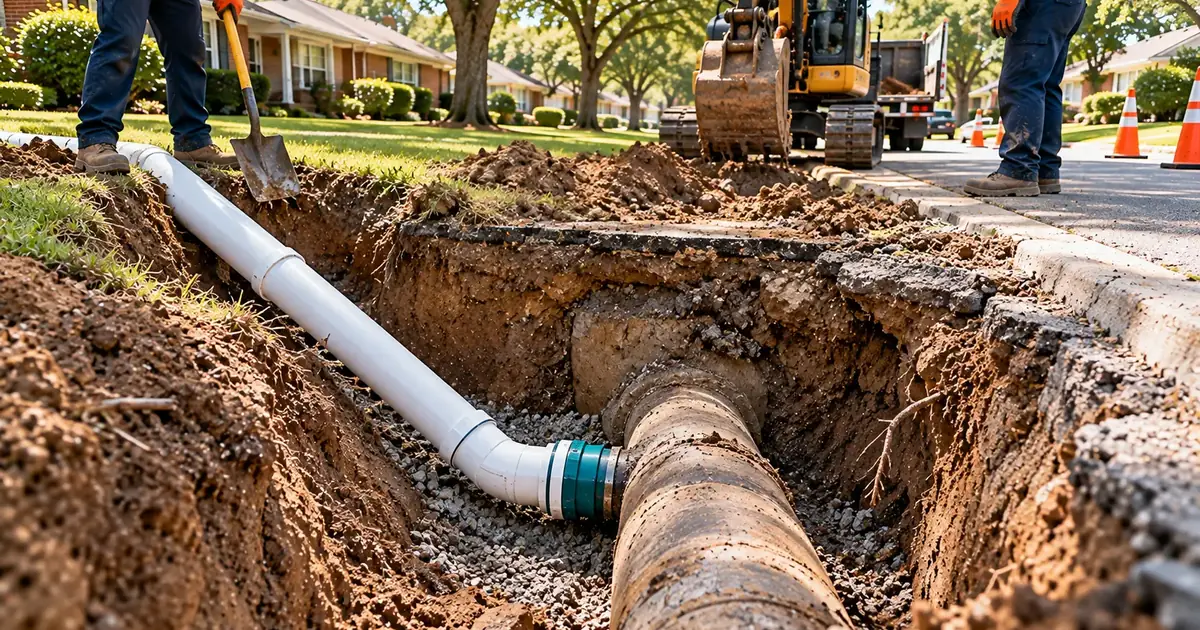
A new sewer line connection runs a sewer lateral from a building to the public sewer main and ties it in at an approved tap. It involves a permit, marking of buried utilities through 811, excavation, laying pipe at the correct slope, making the connection to the main or an existing stub, and passing the city inspection before the trench is closed.
Whether you are building a new house on an empty lot, adding a guest house or shop, moving the line for a remodel, or reconnecting a vacant home, the sewer connection has to be done right the first time. The slope, the materials, the connection to the main and the inspection all matter, because this pipe will be in the ground for decades.
When You Need a New Connection
- New construction on a lot served by the city sewer.
- Additions and accessory buildings that need their own drain line.
- Relocating a line that runs under a planned addition, pool or driveway.
- Reconnecting a vacant or rebuilt home whose old lateral is abandoned or failed.
- Moving from septic to sewer where the city line is available. See septic to sewer conversion.
How the Process Works
Plan and permit
We confirm where the city main or stub is, check depth and route, and pull the required permit.
Mark utilities
811 is called so gas, water, power and communications lines are marked before digging.
Lay the line
PVC sewer pipe is laid on firm bedding at a steady downhill slope, with a cleanout near the building.
Connect and inspect
The line is tied in at the approved point, inspected, camera-checked and backfilled.
Getting the Details Right
- Slope. Too flat and waste settles; the new line is set at a consistent fall toward the main, commonly about a quarter inch per foot for a 4-inch line.
- Depth and cover. Enough soil over the pipe to protect it from loads and weather.
- Bedding. Compacted gravel under and around the pipe so it does not settle into a belly later.
- Connection fittings. Approved saddles, tees or wyes at the main, installed at the angle the utility requires.
- Tracer wire and records. Where required, a tracer wire makes the plastic pipe locatable later.
Why the Inspection Protects You
It can feel like red tape, but the city inspection is on your side. The inspector checks the slope, the bedding, the connection and the materials while the trench is still open, before anything is buried. If a problem is caught now, it is a quick fix. If it is buried and found later, it means digging up the yard again, sometimes under a new driveway or landscaping. We do not backfill until the inspector signs off, and we give you the final camera footage of the completed line so you have a record of how it was built. That record is also useful if you sell the property or ever need a repair later.
Working With Builders and Contractors
We work with homeowners directly and with general contractors and builders on new homes and additions. We can coordinate timing with the rest of the site work, meet the inspector and provide camera footage of the finished line for the builder’s records. If an older lot has an abandoned lateral, we camera it first to see whether any of it can be reused safely.
Reusing an Old Lateral
On older Pine Bluff lots, especially where a house has been torn down and rebuilt, there is often a sewer lateral already in the ground. It can be tempting to hook the new house up to it and skip the trench. Sometimes that is fine. Often the old line is clay or Orangeburg that has been sitting unused, with roots, cracks or a collapsed section waiting for the first real flow. A camera run before the new plumbing is connected tells you whether the old lateral is worth keeping or should be replaced while the lot is still open and easy to dig. Replacing it before landscaping and driveways go in costs far less than doing it afterward.
New lines are built to the same camera-checked standard as every sewer line repair in Pine Bluff we do.
Call to plan your new sewer line and city connection. We handle the permit, the digging and the inspection.
New Sewer Connection FAQ
Who makes the actual tap into the city main?
It depends on the utility’s rules. Some utilities make the tap themselves and some allow approved contractors. We confirm the process for your address before work starts.
How long does a new connection take?
The dig and pipe work is often a day or two. Permit approval and inspection scheduling add time, so plan ahead.
Are there fees from the city?
Utilities commonly charge tap or connection fees in addition to the construction cost. We will point you to the current fees when we plan the job.